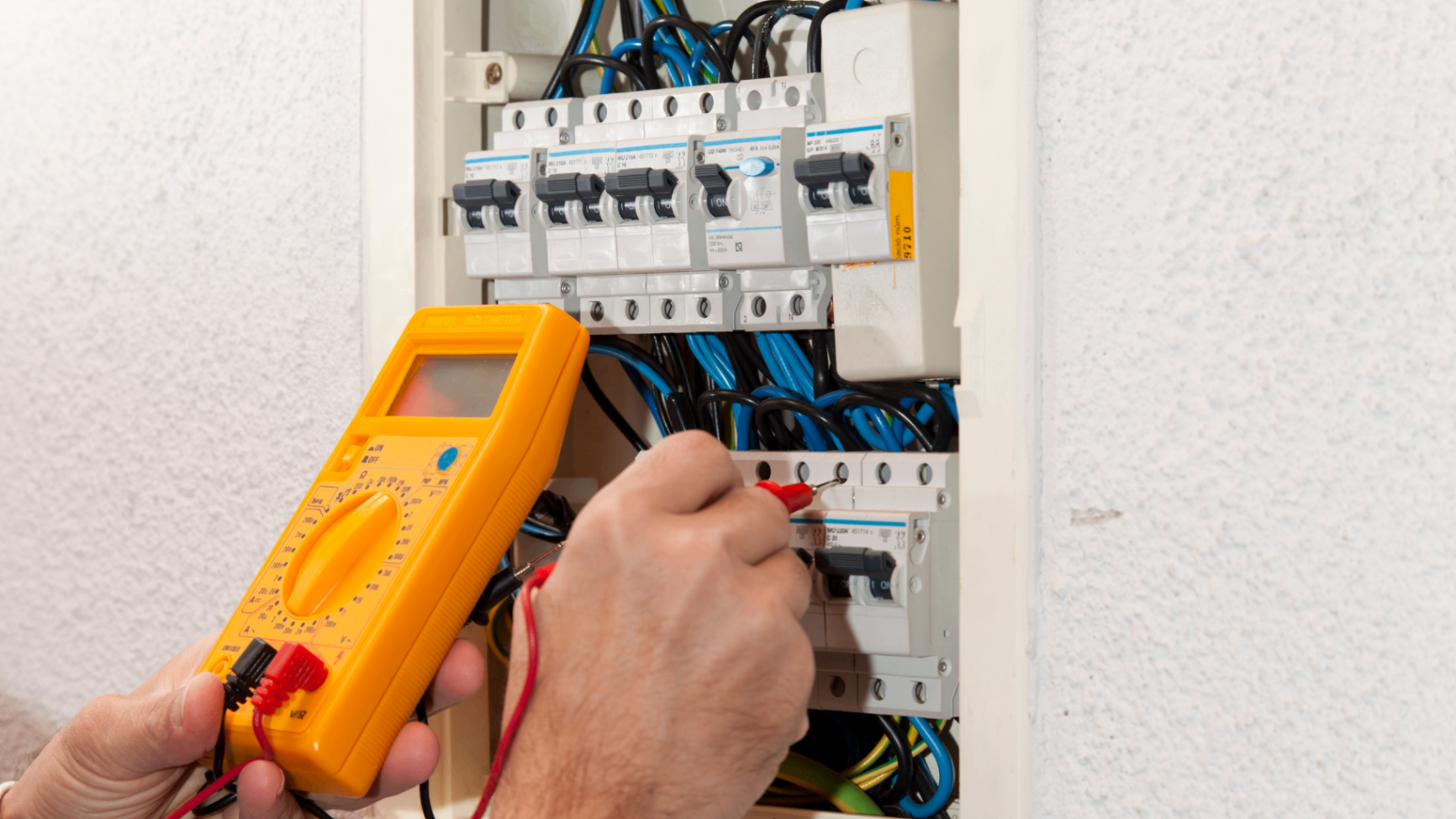
What we actually test
For every circuit: insulation resistance at 500 V DC between live conductors and earth, continuity of protective conductors, polarity, earth fault loop impedance (Zs), and prospective fault current at the origin. For every RCD: trip time at rated current and half current. Consumer unit thermally imaged where accessible.
Understanding the grades
C1 (danger present, immediate action required) — for example, exposed live conductors. Automatically renders the report unsatisfactory. C2 (potentially dangerous) — a fault that could become dangerous, such as a missing RCD on a bathroom circuit. Also renders the report unsatisfactory. C3 (improvement recommended) — non-compliant with current regs but not immediately dangerous, e.g. a green-only earth conductor. Doesn't fail the report on its own. FI (further investigation) — something we can't fully assess without invasive work.
Landlord EICR requirements in England
The Electrical Safety Standards regulations require a satisfactory EICR before a new tenancy starts, and at least every five years thereafter. A copy must be given to tenants within 28 days and to prospective tenants within 28 days of request. Local authorities have powers to demand a copy within seven days. We handle every landlord EICR to this exact spec and issue the report accordingly.
Commercial EICRs
Commercial and industrial installations follow the same test standard but usually on a shorter cycle — every five years, or annually on installations with high wear (workshops, kitchens, laundrettes). We work around opening hours and can perform out-of-hours testing where continued operation is critical.
Remediation after an unsatisfactory EICR
If the report comes back unsatisfactory, we quote for the exact remediation required — often a consumer unit change, a specific circuit rework, or bonding additions. You are under no obligation to use us for the works; the report is yours to take to any competent contractor.